Did you know that there are more than 170,000 charities registered in the UK, according to the Charities Commission as of 31st March 2025. This number does not include community projects or charities with an income below £5,000 a year.
This blog post highlights Charity Day on September 5th and shares insights from bookkeeping in the non-profit sector.
Charities are non-profit organizations with the main goal in mind is not to make a profit, but to fulfil their mission and help socially to all who need help. Despite the fact that charity is a non-financially orientated, as a bookkeeper or accountant, you still need to perform the basic tasks like maintaining the ledger, reconciling bank and assisting in the preparation of financial accounts. Charities rely on donations, funding, and so their accounts are under loop even more, because of the public funds. Good bookkeeping ensures transparency, helps trustees to make informed decisions about running the charity, and keeps the entity legally compliant.
Whether you are bookkeeping for a small business, non-profit, or charity, the fundamentals of bookkeeping remain the same, but of course, there are a few specific areas for charities.
Accurate record-keeping
- Track all income and expenditure in the relevant software, ensuring back up data;
- Keep receipts, invoices and bank statements either digitally or in paper formats;
- Perform reconciliation regularly to spot any errors and correct immediately.
Restricted and Unrestricted Funds
- Restricted funds – money, given to the charity for a specific purpose, like grant for youth education. These must be tracked and spent only as intended;
- Unrestricted funds – general donations, that can be used towards business running costs and other needs.
- Designated funds is a portion of unrestricted funds, that is used for a specific program or a project.
- Charities use fund accounting to separate restricted, unrestricted an designated funds.
Gift aid
- Charities can claim back 25p for every £1 donated by the UK taxpayer.
- The bookkeeping system should be able to track eligible donations and maintain donor declarations.
Regulatory Reporting
Charities in the UK are regulated by the Charity Commission, funded by the Treasury department, which is an independent body to oversee over 180,000 registered charities and thousands of non-registered charities (like community projects). Any member of the public can send an inquiry about a charity and report any wrongdoing for them to investigate. If you need to find a charity, please use their official search. Here are also links to readers in the US Charities and nonprofits | Internal Revenue Service and Australia Home | ACNC.
Charities Act 2011 (UK) stipulates the regulations by which charities should operate. As mentioned above, profit is not the main purpose, however it is vital to comply with standards and ensure the accuracy of records.
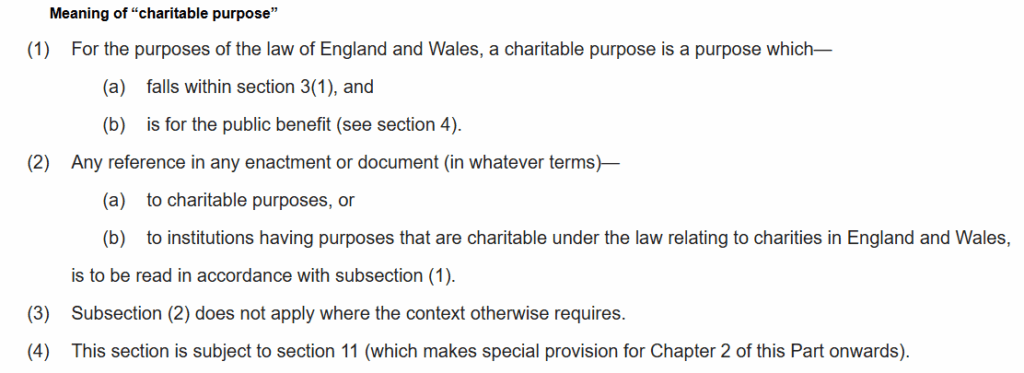
- Every UK charity must submit an annual report and accounts to the Charity Commission (if turnover exceeds £25,000). Smaller charities may submit the simplified accounts; however, larger charities must produce a set of accrual accounts, a trustee’s annual report, and possibly an independent examination or audit.
- UK charity trustees are legally responsible for the charity’s financial management.
Grants and Project Tracking
- Many funders may required the detailed financial report for specific projects.
- Accurate and up to date bookkeeping is vital and ensures the compliance with grant conditions.
Some tips for effective charity bookkeeping
- Use either Xero or QuickBooks software with an appropriate chart of accounts, otherwise search for Paxton, Sage for charities. These software should have a feature to account for Gift aid and restricted funds.
- The approval limits, expense policies must be very clear, as well as cash or petty cash handling. This protects against fraud and ensures consistency in treatment.
- Trustees should review the financial reports quarterly known as management accounts. If you in charge to prepare those, ensure that you consult with an accountant for review and advice.
- Automate the reclaim of gift aid relief, where possible.
- Stay compliant and submit returns online if this is a part of your job. Otherwise, by keeping the records up to date, you help accountants and trustees tremendously in running a charity.
- more tips on Instagram learnbookkeepinguk !